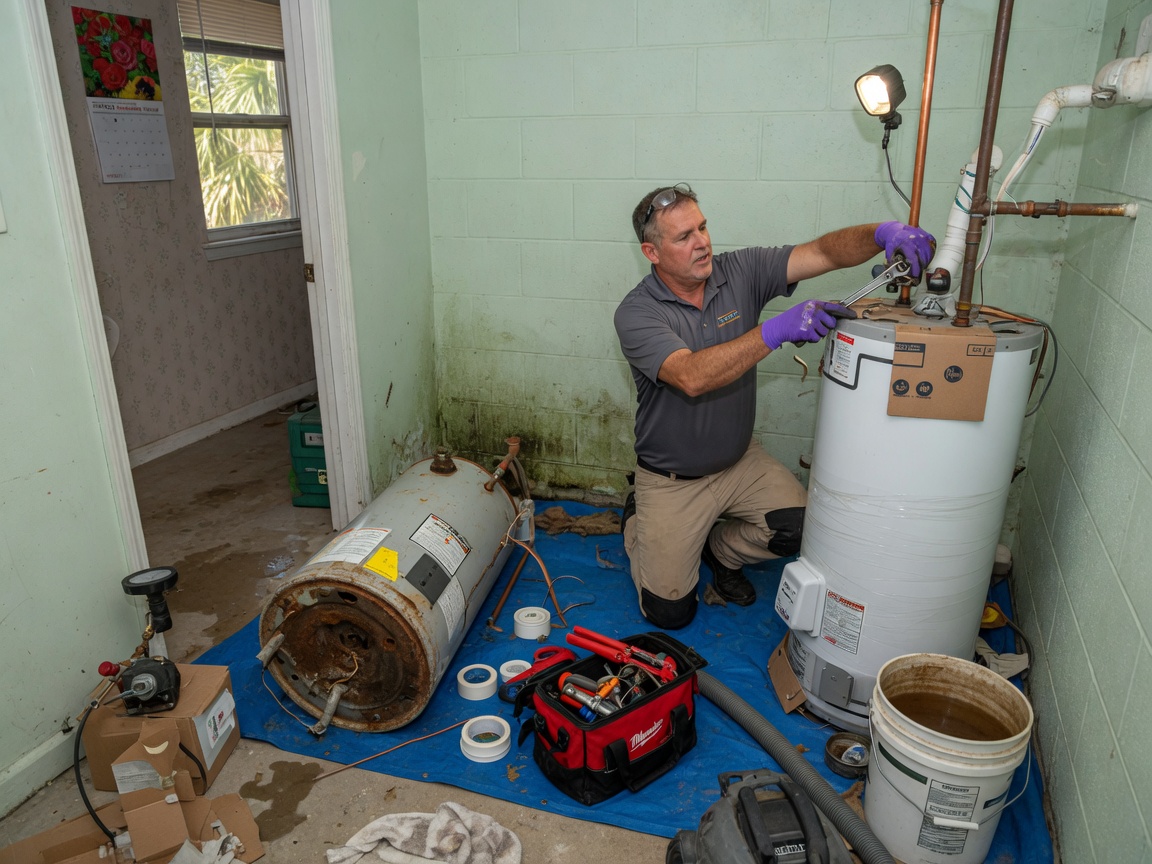
Plant City homes built before the 1990s in Downtown Plant City and Walden Lake often have 40- or 50-gallon tanks set in tight utility closets or garages with limited clearance. Replacing them requires shutting off the main water line at the street, draining sediment that builds up faster in our mild winters, and checking the existing venting or electrical runs before the new unit goes in. Hillsborough County inspectors look closely at seismic strapping and expansion tanks on every swap, so we pull permits and schedule the inspection the same day the unit is set.
Humidity here accelerates corrosion on anode rods and nipples, especially in homes near the Florida Strawberry Festival Grounds where irrigation water carries more minerals. We pull the old tank through the garage door when possible, then set the new one on a raised platform to keep the drain valve clear of floor moisture. Tankless conversions are common for Lakeland commuters who want endless hot water for larger families, but we still verify the gas line size and combustion air supply before committing to the changeover.
Electric-to-gas swaps appear regularly in Walden Lake because many original builders installed resistance units that no longer keep up with demand. We run new black-iron or CSST lines from the meter, install a condensate drain for high-efficiency models, and pressure-test everything before restoring service. Access through the narrow side yards common in older Plant City blocks means we stage materials on a cart so we never tear up landscaping.
Technician insight
In Plant City the thing that catches most people out with Water Heater Replacement is the sediment load in older tanks around Walden Lake. Mild winters keep the water warm enough that scale never fully settles, so the drain valve is often plugged and the tank is heavier than expected when we try to roll it out of a narrow Downtown Plant City garage.
Walden Lake Garage Swap
Homeowner called after noticing rusty water from the hot tap. We found a 22-year-old electric tank with a failed anode and heavy sediment. Replaced it with a 50-gallon high-efficiency gas model, ran a short CSST line from the existing meter, and set the unit on a stand to clear the damp garage floor. Water was hot again the same afternoon with no landscaping damage.
Water Heater Replacement Services We Offer
✓Standard Tank Water Heater Replacement
Remove the existing tank and install a new 40- or 50-gallon unit sized for the home's demand in Plant City neighborhoods.
✓Tankless Water Heater Conversion
Replace a conventional tank with a tankless unit, including gas line upsizing and venting adjustments common in Hillsborough County homes.
✓Electric to Gas Water Heater Conversion
Switch from electric resistance to natural gas, running new piping and ensuring proper combustion air in older Downtown Plant City properties.
✓High Efficiency Condensing Replacement
Install a high-efficiency condensing model with condensate drain and upgraded venting for homes near Walden Lake.
✓Commercial Water Heater Replacement
Replace larger commercial units at properties near Plant City Stadium or the Florida Strawberry Festival Grounds with code-compliant models.
Water Heater Replacement Cost in Plant City, FL
| Service | Typical Range | What Affects It |
|---|---|---|
| Standard 40-50 Gallon Tank Replacement | $900–$1,600 | Varies with model efficiency and garage versus closet location |
| Tankless Conversion | $2,200–$3,800 | Includes gas line sizing and venting changes |
| Electric To Gas Conversion | $1,400–$2,500 | Depends on distance to gas meter and new piping runs |
| High-Efficiency Condensing Unit | $1,800–$2,900 | Includes condensate pump and upgraded venting |
Ranges are typical for Plant City, FL and confirmed with an exact written quote before any work starts.
How it works
- 1
Site Assessment
Inspect the existing unit, water and gas lines, venting, and access route in the specific Plant City home.
- 2
Permit And Material Pull
Pull required Hillsborough County permits and stage the correctly sized replacement unit and fittings.
- 3
Old Unit Removal
Shut off utilities, drain the tank, disconnect lines, and remove the old heater through the available access point.
- 4
New Installation And Test
Set the new unit, connect lines, install required safety devices, restore service, and verify operation before leaving.
Pricing
Upfront written quotes after inspection; final price depends on unit size, fuel type, and access difficulty.